

















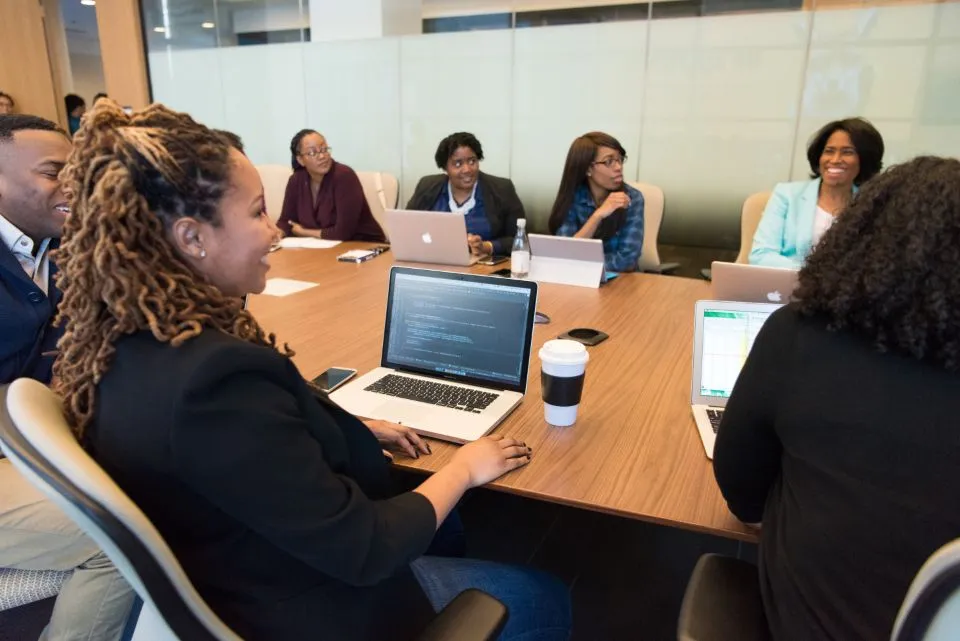





Mentoring in Software Teams Mentoring in Software Teams
How to design mentoring that helps new developers become productive and stay.
What this presentation covers
What this presentation covers
What this presentation covers
What this presentation covers
What blocks new developers
Newcomers hit five kinds of barriers
A review of 20 studies found 15 barriers that newcomers face in open source.
- Social interaction
- Prior knowledge
- Finding where to start
- Documentation
- Technical hurdles
Does mentoring speed things up
Mentored developers contribute sooner
Mentored newcomers became active earlier than those who joined the usual way.
When onboarding falls short
Easy first bugs do not keep people
At Mozilla, program newcomers were half as likely to become long-term contributors.
- Did the program keep newcomers? Half as many stayed long term.
- Did it help anyone? Those who stayed found it valuable.
Choosing first tasks
Choose first tasks with care
At Microsoft, first tasks shaped how new developers learned, gained confidence and fit in.
- Learning the code base and the tools
- Confidence a first change that ships
- Belonging knowing who to ask
Match programming evidence
Matching costs effort, buys speed or quality
A meta-analysis found slightly better quality, shorter duration and more total effort.
- Quality small gain
- Duration medium gain, done sooner
- Effort medium cost, two people
When to match
Use matching on complex work for quality
Matches were faster on simple tasks and wrote better code on complex ones.
- Simple tasks faster, but lower quality
- Complex tasks higher quality, more effort
The first week
Clear technical hurdles before day one
Technical hurdles are one of the five barrier groups newcomers face.
- The project builds on the first day
- A named mentor outside the manager
- A starter task with a reviewer
- A map of who owns what
Code review as mentoring
Make code review a teaching moment
Reviewers can explain why a change matters, not only what to fix.
Mentornity AI
Ask Mentornity AI, approve what it prepares
It reads your program’s live data, answers with numbers and charts, and drafts the next step.
Answers in numbers and charts
Program health, quiet matches, waiting applications and end-of-term reports.
Matches and applications by your rules
It scores candidates with your matching rules and screens applications for you.
You set how much it does alone
Changes come as cards, or run by rule at your level.
Names stay with you
The model sees participants under aliases and never their contact details.
Claude, ChatGPT and MCP
Mentornity inside Claude and ChatGPT
Mentors and mentees ask in plain words; the assistant does the work in Mentornity.
Claude, ChatGPT or any MCP app
In Claude from the connector list; ChatGPT and Cursor by server address.
Meetings, tools, forms and messages
It finds slots, plans meetings, fills in tools and forms, drafts replies.
A preview before every change
The assistant shows what will change; nothing happens until they say yes.
The program team decides
It sees only what the member sees; you can turn it off.
Goals and Mentornity Academy
Participants set goals, learn and earn badges
Goals in My development, guides in Mentornity Academy, and skill badges for mentors.
Their own goals in My development
They set goals and rate progress at start, mid-point, end and follow-up.
Badge courses for mentors
Seven skills, from active listening to feedback, each with a 20-question exam.
Content for mentors and mentees
Research-based guides, a deck for every tool, decks for your program type.
A badge they can share
A passed exam earns a badge page they can add to LinkedIn.
Sources
The research behind this presentation
- Steinmacher, I., Graciotto Silva, M. A., Gerosa, M. A. & Redmiles, D. F. (2015) A systematic literature review on the barriers faced by newcomers to open source software projects Information and Software Technology, 59, 67-85
- Fagerholm, F., Sanchez Guinea, A., Münch, J. & Borenstein, J. (2014) The role of mentoring and project characteristics for onboarding in open source software projects Proceedings of the 8th ACM/IEEE International Symposium on Empirical Software Engineering and Measurement (ESEM 2014), 1-10
- Labuschagne, A. & Holmes, R. (2015) Do onboarding programs work? 2015 IEEE/ACM 12th Working Conference on Mining Software Repositories (MSR), 381-385
- Ju, A., Sajnani, H., Kelly, S. & Herzig, K. (2021) A case study of onboarding in software teams: Tasks and strategies 2021 IEEE/ACM 43rd International Conference on Software Engineering (ICSE), 613-623
- Hannay, J. E., Dybå, T., Arisholm, E. & Sjøberg, D. I. K. (2009) The effectiveness of match programming: A meta-analysis Information and Software Technology, 51(7), 1110-1122
Help new developers ship and stay
Clear the barriers, pick first tasks with care and match where it pays.