

















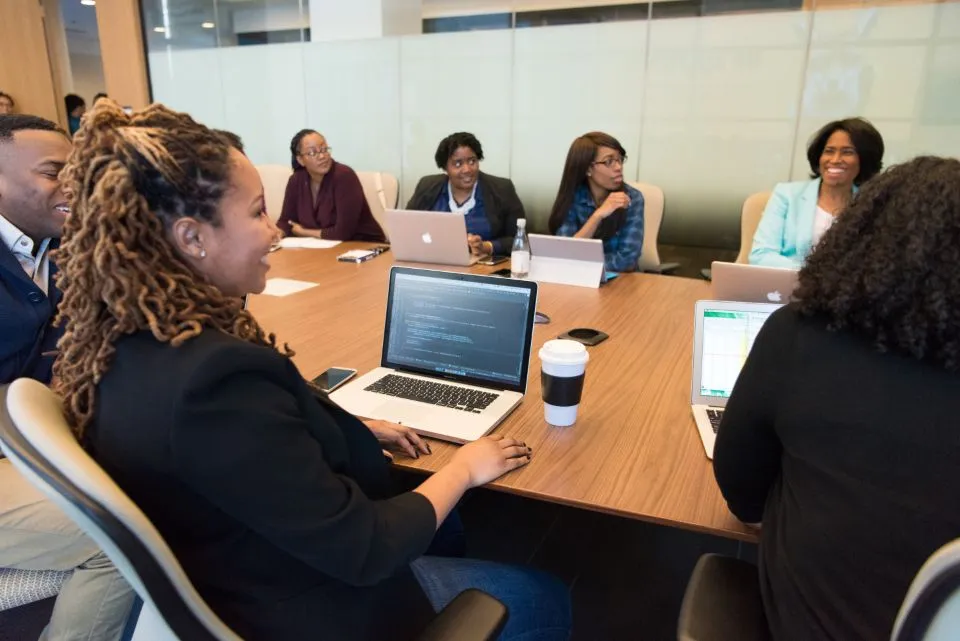





Mentoring in Professional Associations Mentoring in Professional Associations
How associations and networks can run mentoring with volunteer members.
What this presentation covers
What this presentation covers
What this presentation covers
What this presentation covers
Developmental networks
Help members build a network
Higgins and Kram see mentoring as several relationships, not one.
- Range contacts across firms and roles
- Tie strength people who will pick up the phone
What mentees gain
Mentoring helps careers, but modestly
A meta-analysis found career benefits, but small effects on outcomes like pay.
- Career satisfaction benefits found
- Pay small effect
Formal and informal matches
Formal matches need extra care
Informal protégés fared best; formal ones mostly did not differ from either group.
- No mentor 284 people
- Formal mentor 53 protégés
- Informal mentor 212 protégés, more support
Why volunteers mentor
Volunteers give for six reasons
The Volunteer Functions Inventory measures six motives, with five items each.
- Values care for others
- Understanding learn, use skills
- Social be with others
- Career career benefits
- Protective ease their own troubles
- Enhancement personal growth
Matching motive and role
Give mentors what they came for
Volunteers whose experience matched their motives were more satisfied and planned to stay.
- Motive
- A role that serves it
- Satisfied, staying
Asking at sign-up
Ask about motives when mentors join
Counting matches across all six motives predicted outcomes better than motives alone.
- Why they want to mentor
- What they hope to learn
- Whom they would like to meet
- How much time they can give
Recruiting mentors
Aim each recruiting message at one motive
In a lab study, messages matched to a reader's motive persuaded better.
- Values a chance to give back to the field
- Understanding staying sharp by teaching others
- Career meeting the field's next generation
What mentors gain
Tell mentors what they gain
Mentors were more satisfied with their jobs and more committed than non-mentors.
- Career mentoring linked to career success
- Psychosocial support linked to commitment
- Role modeling linked to job performance
Reach across firms
Use the reach only a network has
Members can find a mentor outside their own employer, beyond any one firm.
Mentornity AI
Ask Mentornity AI, approve what it prepares
It reads your program’s live data, answers with numbers and charts, and drafts the next step.
Answers in numbers and charts
Program health, quiet matches, waiting applications and end-of-term reports.
Matches and applications by your rules
It scores candidates with your matching rules and screens applications for you.
You set how much it does alone
Changes come as cards, or run by rule at your level.
Names stay with you
The model sees participants under aliases and never their contact details.
Claude, ChatGPT and MCP
Mentornity inside Claude and ChatGPT
Mentors and mentees ask in plain words; the assistant does the work in Mentornity.
Claude, ChatGPT or any MCP app
In Claude from the connector list; ChatGPT and Cursor by server address.
Meetings, tools, forms and messages
It finds slots, plans meetings, fills in tools and forms, drafts replies.
A preview before every change
The assistant shows what will change; nothing happens until they say yes.
The program team decides
It sees only what the member sees; you can turn it off.
Goals and Mentornity Academy
Participants set goals, learn and earn badges
Goals in My development, guides in Mentornity Academy, and skill badges for mentors.
Their own goals in My development
They set goals and rate progress at start, mid-point, end and follow-up.
Badge courses for mentors
Seven skills, from active listening to feedback, each with a 20-question exam.
Content for mentors and mentees
Research-based guides, a deck for every tool, decks for your program type.
A badge they can share
A passed exam earns a badge page they can add to LinkedIn.
Sources
The research behind this presentation
- Higgins, M. C. & Kram, K. E. (2001) Reconceptualizing mentoring at work: A developmental network perspective Academy of Management Review, 26(2), 264-288
- Allen, T. D., Eby, L. T., Poteet, M. L., Lentz, E. & Lima, L. (2004) Career benefits associated with mentoring for protégés: A meta-analysis Journal of Applied Psychology, 89(1), 127-136
- Chao, G. T., Walz, P. M. & Gardner, P. D. (1992) Formal and informal mentorships: A comparison on mentoring functions and contrast with nonmentored counterparts Personnel Psychology, 45(3), 619-636
- Clary, E. G., Snyder, M., Ridge, R. D., Copeland, J., Stukas, A. A., Haugen, J. & Miene, P. (1998) Understanding and assessing the motivations of volunteers: A functional approach Journal of Personality and Social Psychology, 74(6), 1516-1530
- Stukas, A. A., Worth, K. A., Clary, E. G. & Snyder, M. (2009) The matching of motivations to affordances in the volunteer environment: An index for assessing the impact of multiple matches on volunteer outcomes Nonprofit and Voluntary Sector Quarterly, 38(1), 5-28
- Ghosh, R. & Reio, T. G. (2013) Career benefits associated with mentoring for mentors: A meta-analysis Journal of Vocational Behavior, 83(1), 106-116
Start with the mentors' motives
Ask why they volunteer, then shape the role around the answer.