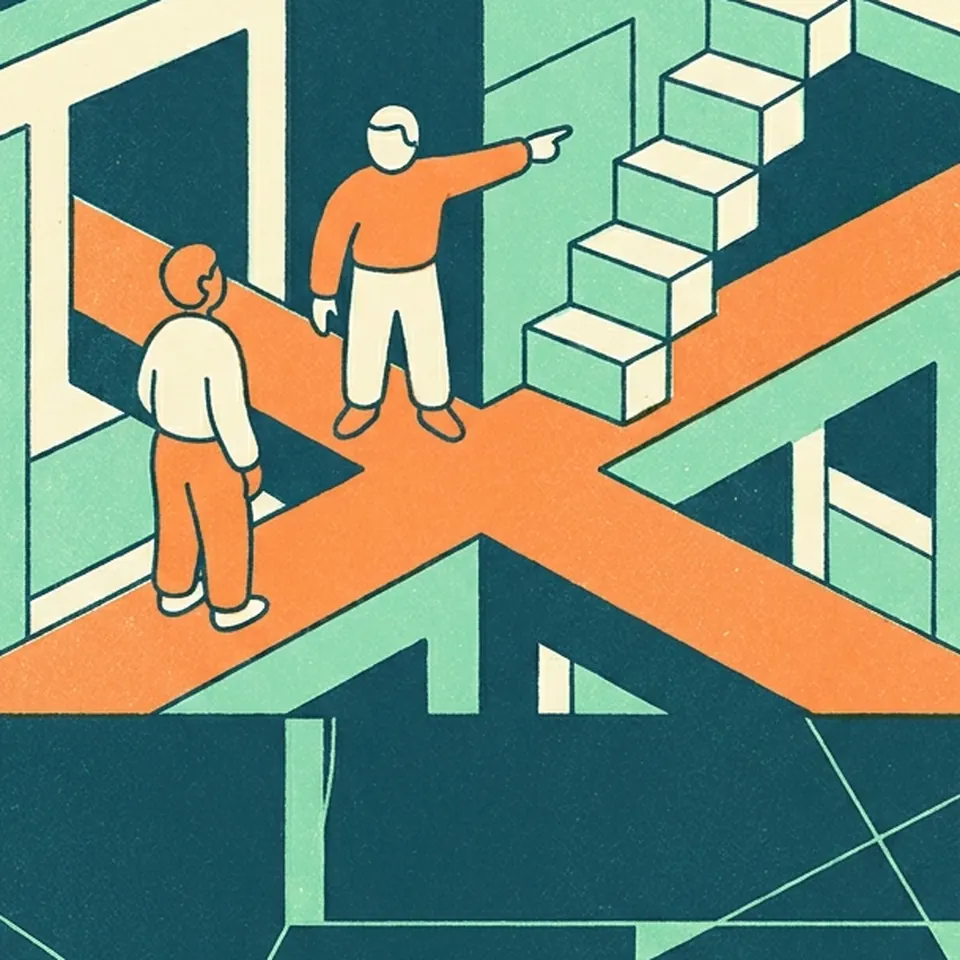
The problem
In many companies, good people leave because they cannot see their next step. They do their work well, but they do not know how to grow or where their career is going.
When they finally resign, the exit interview explains why. By then, it is too late to fix the problem, and the company loses a great employee.
How organizations usually handle it
Companies usually try to solve this with annual reviews or standard training courses. These happen rarely and treat everyone the same. An employee needs someone to talk to about their own specific career path.
How mentoring solves it
Mentoring means an experienced person meets one employee regularly, over months, with a clear goal. Here, the mentor is someone from another part of the company. They know the business and can help the employee see what is possible.
Because they meet again and again, the mentor helps them turn vague ideas into a real plan. The employee feels valued and sees a future for themselves inside the company.
How it works on Mentornity
Matches across the company
Employees and mentors apply through your forms. Matching rules and Mentornity AI propose bulk matches across different departments, and your team approves them in one click.
Goals with dates
With the Development Plan, the employee and mentor turn big goals into clear activities with dates, so they always know what to do next.
Check-ins on progress
At the start, middle and end, a check-in asks both sides to rate goals, working style, being heard and progress from zero to ten.
Help for quiet matches
If a mentor and employee go thirty days without meeting, they appear on a list. Mentornity AI suggests an email to help them restart.
Or a mentor pool, with rules
Not every program needs fixed matches. In a pool program, mentors open their free hours and employees book them themselves. Rules still decide who sees whom: for example, an engineer sees only mentors from other departments.
What you can measure
Your team sees which employees meet their mentor regularly and who has not met for thirty days.
You track how scores for goals, working style, being heard and progress change from the start to the end.
You see which development activities are finished and which are still waiting.
Questions
Can we match employees with mentors in different departments?
Yes. You set matching rules based on your application forms. Mentornity AI can propose bulk matches that cross departments, and your team approves them in one click.
How do we know if the mentoring is actually working?
Check-ins at the start, middle and end measure goals, working style, being heard and progress. You see these scores change over time.
What if an employee and mentor stop meeting?
If they do not meet for thirty days, your team sees them on a list. You can send an email suggested by Mentornity AI to check if they need help.